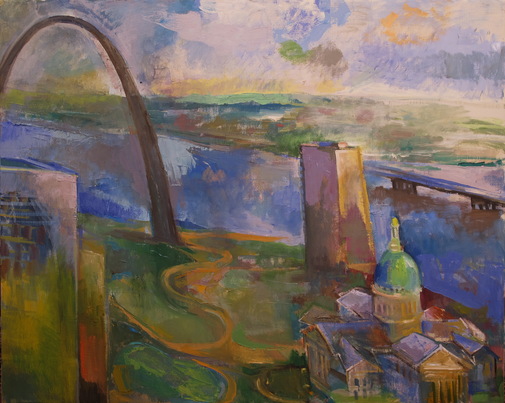
Martha Hayden
Color viscosity printing incorporates many printmaking techniques
Viscosity printing is a multi-
.
Fine Art Printmaking

Intaglio prints are created from metal plates, either scratched into or etched with acid. I force a viscous ink (about the consistency of oil paint) into grooves, scratches, etched lines or indentations that I create with a variety of etching tools. I then wipe the polished surface clean using a loosely woven cloth, followed by newsprint, leaving ink only below the plate level. After covering the plate with a dampened paper and felt blankets, I run it through a press where great pressure (approximately 8 tons per square inch) pushes the paper down into the engraved or etched grooves to pick up ink. In intaglio we see printed the ink that was below the surface of the plate and is now embossed on the paper. For a two color print, two plates are used and the print is run through the press twice.
Intaglio printed from two plates
Viscosity Print from an intaglio metal plate
In contrast, to create relief prints, linoleum cuts and woodblocks, I cut away from the plate what I don’t want to print, and roll ink over the remaining high parts of the plate.
Linoleum relief print
Developed by Stanley William Hayter during the late 1960s, Color viscosity printing is among the latest developments in intaglio printmaking. Using variations of this technique, I start by making a multilayered plate, much deeper than a normal etching. The plate is made of metal (I use zinc), as in the intaglio processes, and normally requires very long acid baths. To get around this, I began to construct collographs.
In collography, a variety of materials are applied to a rigid underlying layer (such as ragboard or masonite). The word is derived from the Greek word koll or kolla, meaning glue and graph, or the act of drawing. I begin by making collages of cardboard, pasted paper and other textures. I can ink the resulting plate as an intaglio, or with a roller or paintbrush, or some combination of these. The resulting print is termed a collograph. Substances such as acrylic texture mediums, sandpapers, cloth, string, or cut cardboard can all be used in creating the plate. Collography is a very open printmaking method. Ink can be applied to the upper surfaces of the plate with a brayer for a relief print, or ink can be applied to the entire board and then removed from the upper surfaces, leaving it in the lower spaces, resulting in an intaglio print.
Viscosity print made from a collograph
In my viscosity printing, I combine both intaglio and relief methods. Different tonal
effects and vibrant colors result from differences in the depth of relief on an etched
plate or collograph’s highly textured surface. I mix three colors of ink, each of
a different viscosity or amount of oiliness, adjusted by adding linseed oil. The
plate is inked in several stages. The first ink is fairly dense — of a relatively
high viscosity. The high-
Because II like to experiment with complex combinations of varying colors and viscosities, the process results in unique prints and small editions.
Martha Hayden